Japchae Korean Glass Noodle Stir Fry Recipe
Japchae is a Korean glass noodle stir fry that consistently steals the show at gatherings and family dinners. Have you ever experienced the delightful chegrape juicess of glass noodles, mingled with a symphony of vibrant vegetables and savory, slightly sweet sauce? That’s the magic of Japchae, a dish that’s as visually appealing as it is delicious. It’s no wonder this beloved Korean classic is a go-to for celebrations, holidays, or simply when you crave a truly satisfying and flavorful meal. What makes Japchae so special? It’s the perfect balance of textures and tastes – the slippery, translucent sweet potato noodles (dangmyeon) provide a unique foundation, while the medley of colorful ingredients like spinach, carrots, mushrooms, and onions adds freshness and crunch. The star, however, is the savory-sweet soy-based sauce that coats everything in a glossy, irresistible sheen. It’s a dish that offers comfort, elegance, and an explosion of umami with every single bite.
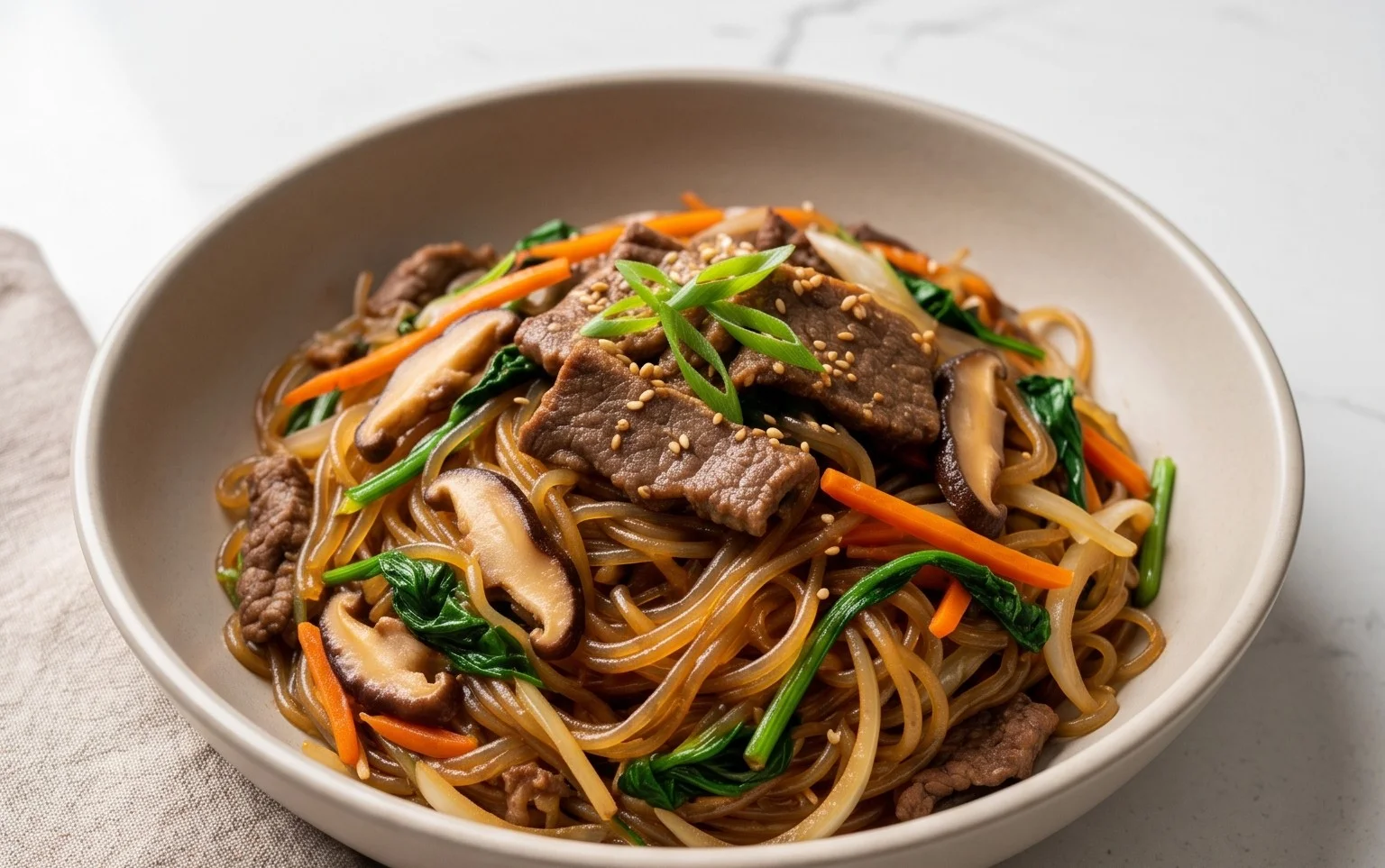
Japchae (Korean Glass Noodle Stir Fry)
Japchae is a beloved Korean dish that’s a true celebration of textures and flavors. It’s a vibrant stir-fry featuring slippery, chewy glass noodles made from sweet potato starch, tossed with an assortment of colorful vegetables, tender marinated beef, and a savory-sweet sesame dressing. While it might seem like a lot of components, the process is quite manageable, and the result is a deeply satisfying and impressive meal that’s perfect for gatherings or a special weeknight dinner. The beauty of Japchae lies in its versatility; you can adjust the vegetables to your liking and even make it vegetarian by omitting the beef. Let’s dive into how you can create this Korean classic in your own kitchen.
Ingredients:
Marinating the Beef
Before we start assembling the dish, it’s crucial to marinate the beef. This step infuses the meat with flavor and ensures it’s tender. In a medium bowl, combine your thinly sliced beef with about 1 tablespoon of soy sauce and a pinch of black pepper. You can also add a tiny splash of sesame oil for extra fragrance, though this is optional. Let this marinate for at least 15-20 minutes at room temperature while you prepare the vegetables. If you have more time, you can refrigerate it for up to a few hours. The soy sauce will begin extract to break down the beef fibers, making it more tender.
Preparing the Vegetables and Noodles
The key to a beautiful and delicious Japchae is to prepare each component separately before bringin extractg them all together.
1. Cook the Noodles: Bring a large pot of water to a boil. Add the sweet potato glass noodles and cook according to package directions, usually around 6-8 minutes, until they are tender but still have a slight chew. Drain the noodles thoroughly and rinse them with cold water to prevent them from sticking together. It’s helpful to toss them with a teaspoon of toasted sesame oil at this stage to keep them separated and add a subtle flavor.
2. Stir-Fry Each Vegetable: This is where the magic of separation comes in. You’ll want to cook each vegetable individually to maintain its distinct texture and vibrant color. Heat a tablespoon of oil in a large skillet or wok over medium-high heat.
3. Cook the Beef and Eggs:
4. Wilting the Spinach: You’ll only need a quick wilt for the baby spinach. You can do this in the same skillet you used for the vegetables. Add a tiny bit of oil and toss the packed baby spinach in the hot skillet for just about 30-60 seconds until it wilts down. Season with a pinch of salt. Remove and set aside.
Assembling the Japchae
Now that all your components are prepped and cooked, it’s time to bring it all together in a flavorful sauce.
5. Making the Sauce and Tossing: In a small bowl, whisk together the soy sauce, honey, brown sugar, and toasted sesame oil. This forms the savory-sweet dressing that coats everything. In a very large bowl, or back in your spacious skillet if it’s large enough, combine the cooked glass noodles, stir-fried carrots, onions, mushrooms, cooked beef, and wilted spinach. Pour the prepared sauce over the mixture. Gently toss everything together using tongs or your hands, ensuring that every strand of noodle and every piece of vegetable and beef is coated in the delicious sauce. You might need to add a little more oil if it seems dry. Add the cut green onions towards the end of the tossing to keep them fresh and vibrant.
Taste and adjust seasoning as needed. You might want a little more salt, sweetness, or sesame oil depending on your preference.
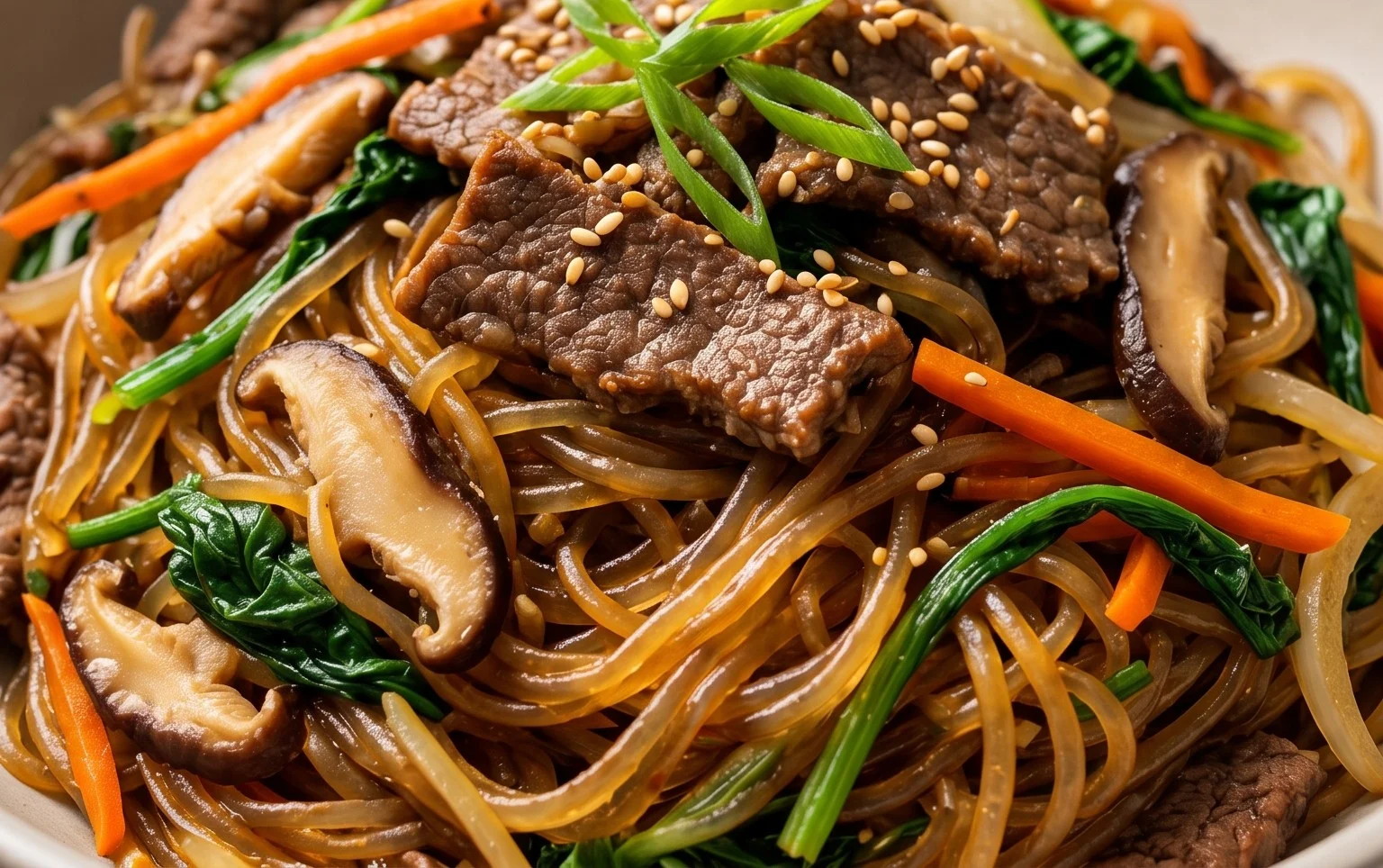
Serve the Japchae immediately while it’s warm. Garnish generously with toasted sesame seeds, if desired, for an extra nutty flavor and appealing visual. Enjoy this delightful and comforting Korean staple!
Conclusion:
I hope you’re inspired to try this delicious Japchae recipe! It’s truly a fantastic dish because it offers a wonderful balance of textures and flavors – the chewy glass noodles, the crisp-tender vegetables, and the savory, slightly sweet sauce all come together beautifully. It’s a testament to Korean cuisine’s ability to create a vibrant and satisfying meal that’s both hearty and surprisingly light. Whether you’re looking for a flavorful side dish to complement Korean BBQ or a complete vegetarian main course, Japchae delivers.
Serving suggestions abound! This Japchae is wonderful on its own, but it also shines alongside grilled meats like bulgogi or kalbi. For a vegetarian twist, consider topping it with a fried egg for extra richness. Don’t be afraid to get creative with variations! You can easily swap out vegetables based on what you have on hand – bell peppers of any color, snap peas, or even mushrooms would be excellent additions. For a meatier version, thinly sliced beef or chicken can be stir-fried with the vegetables.
I truly encourage you to give this Japchae a try. It might seem like a lot of chopping, but the process is incredibly rewarding, and the end result is absolutely worth it. It’s a dish that’s sure to impress your friends and family, or simply make for a delightful meal for yourself.
Frequently Asked Questions:
What are Korean glass noodles?
Korean glass noodles, also known as dangmyeon, are made from sweet potato starch. They have a unique chewy and slightly slippery texture that holds sauces wonderfully. They turn translucent when cooked, which is how they got their name!
Can I make Japchae ahead of time?
Yes, Japchae can be made ahead of time! It’s often even better the next day as the flavors have more time to meld. However, it’s best to stir-fry the noodles and vegetables separately and then combine them with the sauce just before serving, or right before refrigerating, to prevent the noodles from becoming too mushy if overcooked.
What if I can’t find all the vegetables listed?
Don’t worry! Japchae is very forgiving. Feel free to substitute with vegetables that you enjoy or have readily available. Carrots, zucchini, spinach, and even broccoli florets are great alternatives. The key is to aim for a variety of colors and textures.
Japchae (Korean Glass Noodle Stir Fry)
A classic Korean stir-fried noodle dish featuring sweet potato glass noodles, tender beef, and a medley of colorful vegetables, all tossed in a savory and slightly sweet soy sauce-sesame oil dressing.
Ingredients
-
12 ounces sweet potato glass noodles
-
16 ounces beef (cut into strips)
-
2 large eggs (beaten)
-
1 large carrot (peeled and julienned)
-
1 medium yellow onion (thinly sliced)
-
3 mushrooms (thinly sliced)
-
2 cups baby spinach (packed)
-
2 stalks green onion (cut into 1 inch pieces)
-
oil (for cooking)
-
Salt and black pepper (as needed)
-
7 tablespoons soy sauce (light sodium)
-
3 tablespoons honey
-
2 tablespoons brown sugar
-
2 tablespoons toasted sesame oil
-
Toasted sesame seeds (optional for garnish)
Instructions
-
Step 1
Cook the glass noodles according to package directions. Drain and rinse with cold water. Toss with 1 tablespoon of toasted sesame oil, salt, and pepper to prevent sticking. -
Step 2
In a large bowl, marinate the beef strips with 2 tablespoons soy sauce, 1 tablespoon honey, 1 tablespoon brown sugar, and a pinch of black pepper. Set aside. -
Step 3
Heat a tablespoon of oil in a wok or large skillet over medium-high heat. Stir-fry the marinated beef until browned and cooked through. Remove beef from the pan and set aside. -
Step 4
Add a little more oil to the pan if needed. Stir-fry the julienned carrots and sliced onions until slightly softened, about 3-4 minutes. Add the sliced mushrooms and cook for another 2-3 minutes until tender. -
Step 5
In a small bowl, whisk together the remaining 5 tablespoons soy sauce, 2 tablespoons honey, 1 tablespoon brown sugar, and 1 tablespoon toasted sesame oil. Pour this sauce over the vegetables in the pan and stir to combine. -
Step 6
Add the cooked glass noodles, cooked beef, and baby spinach to the pan. Stir-fry until the spinach wilts and everything is well combined and heated through. -
Step 7
Stir in the green onion pieces. Taste and adjust seasoning with salt and pepper if necessary. Serve immediately, garnished with toasted sesame seeds if desired.
Important Information
Nutrition Facts (Per Serving)
It is important to consider this information as approximate and not to use it as definitive health advice.
Allergy Information
Please check ingredients for potential allergens and consult a health professional if in doubt.